


By admin
Cosmetics labelling: what the law requires to be stated
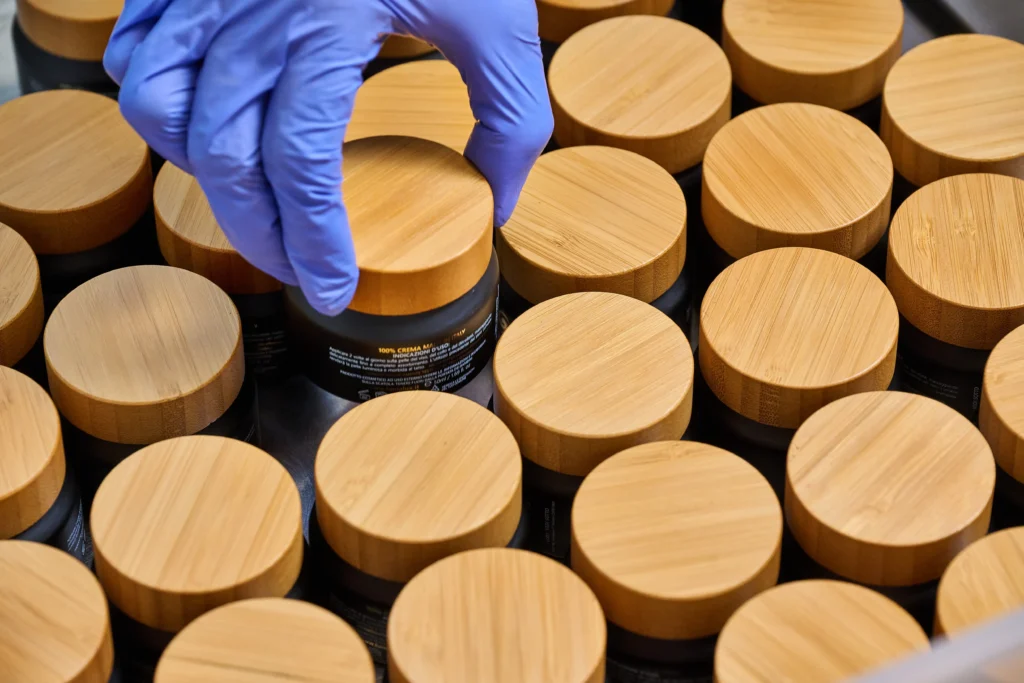
Cosmetic labelling must include the responsible person, nominal content, minimum durability date or PAO, precautions for use, batch number, product function and list of ingredients, in accordance with Regulation (EC) No 1223/2009 and the applicable exceptions. In contract manufacturing projects, brands and manufacturers must clearly establish who prepares and verifies this information before printing.
The label presents the product and helps consumers understand its characteristics, intended use and precautions. For a cosmetic brand, it is therefore an element that should be designed alongside the formula and packaging.
What Information Is Mandatory on a Cosmetic Product Label?
Article 19 of Regulation (EC) No 1223/2009 establishes the information that must appear on the container and outer packaging, subject to specific requirements and exceptions. This information must be indelible, easily legible and visible.
Information | What Must Be Included |
Responsible person | Name or registered company name and address; for imported cosmetics, the country of origin must also be indicated |
Nominal content | Quantity at the time of packaging, expressed by weight or volume, subject to the applicable exceptions |
Durability | Minimum durability date or period after opening, where applicable |
Precautions for use | Warnings and instructions required for the correct use of the product |
Batch number | Batch number or reference identifying the manufacturing batch |
Product function | The function of the cosmetic product, unless it is clear from its presentation |
Ingredients | List preceded by the word “Ingredients”, using the required cosmetic ingredient nomenclature |
The distribution of information between the container and outer packaging follows specific rules. For example, the list of ingredients may appear on the outer packaging only.
For small packages, specific provisions allow certain information to be provided through leaflets, labels, tags or cards.
How Should the INCI List Be Written and in What Order Should Ingredients Appear?
The list of ingredients, commonly referred to as the INCI list, must correspond to the actual product formula and use the names established by the cosmetic ingredient nomenclature.
Ingredients must be listed in descending order of weight at the time they are added to the formula. Ingredients present at concentrations below 1% may be listed in any order after those present at concentrations above 1%. Specific rules apply to colourants.
Perfume and aromatic compositions are indicated as “Parfum” or “Aroma”, while certain substances must be declared individually under the conditions established by the regulations. Ingredients present in the form of nanomaterials must be followed by the word “nano” in brackets.
Regulation (EU) 2023/1545 expanded the requirements concerning fragrance allergens. The transitional period extends to 31 July 2026 for placing products on the market and to 31 July 2028 for the subsequent making available of products that meet the established conditions. For new product launches and packaging reprints, it is therefore necessary to verify whether the updated requirements apply.
What Is the Difference Between PAO, Minimum Durability Date and Batch Number?
These three indications may appear similar, but they serve different purposes:
- Minimum durability date: indicates the date until which the product, when stored correctly, continues to fulfil its initial function and remains safe. It is required for cosmetic products with a minimum durability of 30 months or less.
- PAO, Period After Opening: indicates the period during which the product can be used safely after opening. It applies to products with a minimum durability exceeding 30 months, except where the concept is not relevant.
- Batch number: identifies the manufacturing batch and links the cosmetic product to its production documentation, enabling traceability.
Minimum durability and PAO must be established based on the product’s characteristics and the relevant assessments and tests.
Who Is the Responsible Person for a Cosmetic Product?
The responsible person is a natural or legal person established within the European Union who ensures compliance with the relevant obligations under the EU Cosmetics Regulation.
These obligations include the safety assessment, availability of the Product Information File or PIF, CPNP notification and compliance with cosmetic labelling requirements.
In contract manufacturing, the company physically producing the cosmetic product is not necessarily the responsible person. This role must be identified in accordance with the applicable provisions and properly formalised.
Before launching a product, it is essential to clarify who assumes this responsibility, which details appear on the packaging and who manages the documentation and regulatory obligations. We will explore this topic further in our guide “CPNP Notification: What It Is and Who Is Responsible When Using Contract Manufacturing”.
Which Cosmetic Claims Are Allowed and Which Statements Should Be Avoided?
Cosmetic claims describe a product’s characteristics, qualities and effects through text, names, images and other communication elements.
Regulation (EU) No 655/2013 establishes six criteria: legal compliance, truthfulness, evidential support, honesty, fairness and informed decision-making.
In practice, product promises must be consistent with the available evidence. The presence of a particular ingredient does not automatically demonstrate that the finished product delivers all the benefits associated with that ingredient.
Unsubstantiated properties, claims relating to the treatment of diseases and statements suggesting that the product has been approved by regulatory authorities must be avoided. Expressions such as “dermatologically tested”, “natural” or “organic” also require clear criteria and appropriate supporting documentation.
The review must cover packaging, websites and advertising: all communication channels must describe the cosmetic product consistently.
What Are the Environmental Labelling Requirements for Cosmetic Packaging?
In Italy, packaging intended for end consumers must include the required environmental information, including material identification and waste collection instructions.
Italian ministerial guidelines also allow digital channels to be used under specific conditions. A QR code providing environmental information does not automatically replace the mandatory labelling requirements for cosmetic products.
Packaging materials and components should therefore be considered before finalising the graphic design.
Who Prepares the Label in Contract Cosmetic Manufacturing?
The process requires coordination between the brand, manufacturer and regulatory specialists.
The brand defines its visual identity, product name, target markets and intended messages. The laboratory provides the technical information within its area of responsibility. The regulatory review checks consistency between the label text, formula, documentation and applicable requirements.
Before printing, it is useful to verify:
- Technical information: ingredients, durability, warnings and batch number.
- Marketing content: product function, descriptions and claims.
- Layout: legibility, languages, symbols and positioning of information.
- Approvals: who reviews and authorises the final print-ready version.
Dasais Cosmetic Hub integrates product development, manufacturing and customisable packaging. At the beginning of a project, the parties should also agree on label content preparation, label verification and the regulatory services included. Discover the Dasais partnership model.
For a complete overview of the process, read Contract Cosmetic Manufacturing: What It Is, How It Works and How to Choose a Manufacturer.
Are you preparing to launch a new cosmetic line? Tell Dasais about your product and target markets: formula, packaging and labelling should be planned from the very beginning.
Frequently Asked Questions
Does the label have to be in Italian only?
For the Italian market, it may be acceptable, provided the prescribed nomenclature for ingredients is used. If you sell abroad, you must check the language requirements of the destination countries. Multilingual labels must include the information required in Italian for the domestic market.
What changes apply to cosmetics sold online?
The requirements for physical labelling remain in place, supplemented by the regulations applicable to distance selling. The online product description must be consistent with the packaging; providing details of ingredients, instructions for use and warnings helps consumers assess the product before purchase.
Who is liable for an error on the label?
The responsible person ensures the cosmetic’s compliance; distributors also have specific verification obligations. The liabilities of other parties depend on their role and the nature of the error. Contractual agreements set out the checks to be carried out, but do not remove statutory obligations.