


By admin
Contract cosmetics manufacturing: what it is, how it works and how to choose the manufacturer
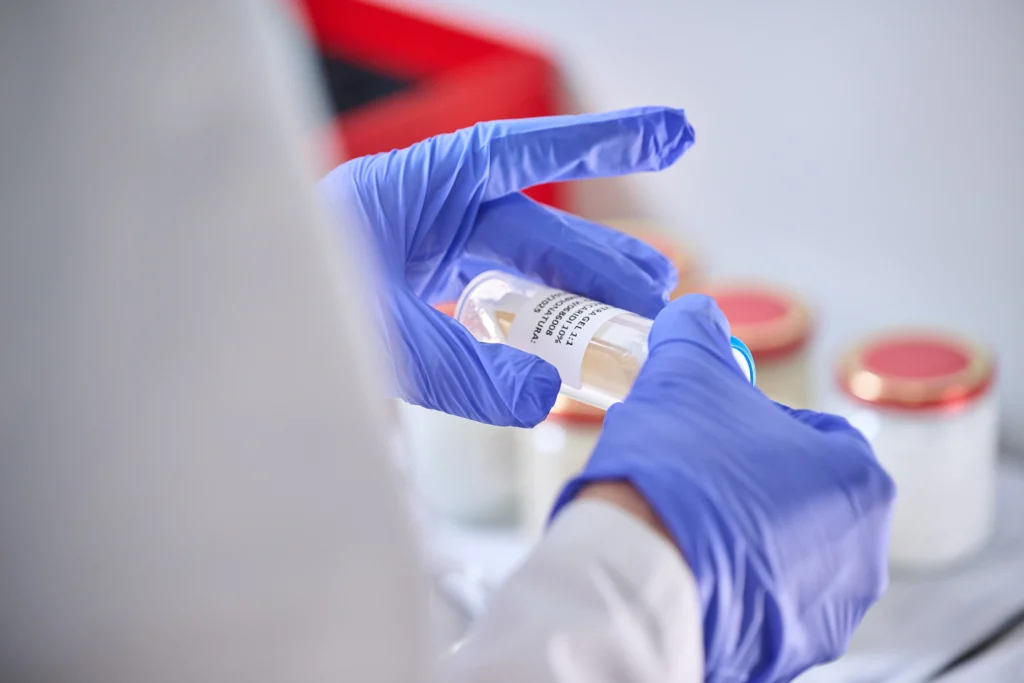
Contract cosmetics manufacturing allows a brand to entrust the development, production and packaging of its products to a specialist partner. The process starts with a brief and ends with the finished cosmetic.
Dasais Cosmetic Hub, in Bussolengo (Verona, Italy), supports brands with custom formulations and scalable production.
Creating a cosmetic line means turning an idea into a product that fits the target audience, the positioning and the goals of the brand. The choice of manufacturing partner shapes this process: from customisation options to quantity management and supply continuity.
Understanding how contract manufacturing works helps you set up the project and compare proposals using concrete criteria.
What is contract cosmetics manufacturing?
Contract cosmetics manufacturing is a service in which a specialist company makes products that will be sold under the client’s brand.
The brand defines the identity of the line, the target audience and the commercial strategy. The manufacturer provides formulation expertise, facilities and processes to make the cosmetic as agreed.
The scope of the service can vary: some projects cover production only, others include research and development, testing, packaging and support with regulatory matters. That is why it is useful to clarify from the start which activities are included.
This model can support both the launch of a new brand and the expansion of an existing line, without requiring the brand to organise all production activities in-house.
How does it work, step by step?
Every project has specific needs, but the process can be described in six main stages.
- Brief and idea assessment
A detailed brief makes it possible to assess feasibility and identify priorities before development begins. A cream intended for a beauty salon and a product designed for a sports routine, for example, may require different sensory characteristics and packaging.
The product type, target market, positioning, texture, desired ingredients, format, budget and selling price are then defined.
- Formula development
The laboratory turns the brief into a formulation, selecting ingredients and characteristics that fit the project’s goals.
At Dasais, research and development uses a proprietary AI platform with a database of over 36,000 ingredients. This technology supports the technicians’ work in analysing formulation options; laboratory experimentation and testing remain part of the process.
Discover the Dasais research and development laboratory
- Product testing and checks
The formulation undergoes specific tests to assess its stability over time and under different storage conditions. Characteristics such as appearance, colour, odour and consistency are observed, together with the relevant physical and chemical parameters, such as pH and viscosity.
The aim is to verify that the product keeps its expected characteristics within the limits defined for the formula. Compatibility tests also assess the interaction between the cosmetic and the chosen container.
- Packaging and labelling
The container must be consistent with the formula and the way it is used. Jar, tube or bottle affect dosage, user experience and the presentation of the line.
At this stage the graphic elements and label information are also defined, coordinating brand identity with the applicable requirements.
- Production and packaging
The formula is transferred to the agreed production scale. Filling, labelling and the planned packaging operations follow.
Dasais describes a modular production system, able to adapt batches and formats to the needs of the project, from a small initial run to larger volumes. - Checks, traceability and delivery
The process ends with the planned checks and delivery as agreed. Batch documentation makes it possible to reconstruct production activities and supports the continuity of the project in later supplies.
Private label and custom formula: what is the difference?
Contract manufacturing describes the production relationship between the laboratory and the brand. Private label and custom formula, on the other hand, are two possible ways of developing the product.
Solution | How it works | What to consider |
Private label, in the sense of a catalogue formula | The brand starts from a formula that is already available | Possible customisations and exclusivity terms |
Custom formula | The formulation is developed from a specific brief | Development, testing and agreements on ownership and exclusivity |
An existing formula can reduce the initial development work. A custom formulation makes it possible to work on the distinctive features the brand wants.
Dasais offers a model based on custom, exclusive formulations for each client.
To learn more, read the article: Private label or custom formula: how to choose
How much does contract cosmetics manufacturing cost, and what minimum batch is needed?
The cost depends on the characteristics of the project and the services required.
The main items to consider are:
- Formula development: complexity, sampling and customisations.
- Ingredients: type, availability and requirements of the raw materials.
- Testing and documentation: checks and activities planned for the product.
- Packaging: container, labels and outer cartons.
- Quantity: batch size and the impact of start-up costs on the cost per unit.
Dasais states that its production is scalable, but the minimum order for a specific cosmetic must be agreed with the team.
How to choose a contract cosmetics manufacturer?
Choosing a contract cosmetics manufacturer means finding a partner able to understand the project, develop it and support its growth. Formulation expertise, process control and production flexibility are some of the criteria to evaluate.
In addition, having a single point of contact for the whole project makes coordination between the different stages easier, makes communication clearer and helps reduce errors and management time.
Expertise and customisation capability
The laboratory must be able to translate the brand’s needs into concrete product characteristics. Dasais develops custom formulations starting from the project’s goals, supported by a proprietary AI platform with a database of over 36,000 ingredients. The technology supports the technicians’ work in research and formulation design.
Good manufacturing practice and certifications
The quality of a manufacturing partner is also judged by the processes it adopts and the certifications it holds. Dasais holds UNI EN ISO 22716 certification for the production and packaging of skin, hair and personal hygiene cosmetics. The standard concerns good manufacturing practice: it governs production aspects and does not certify the efficacy of an individual cosmetic.
Traceability
A structured traceability system makes it possible to reconstruct the path of every batch. Dasais uses interconnected equipment and production process monitoring systems, together with Batch Records: documents that record the operations and checks carried out for each batch.
Exclusivity and confidentiality
For a brand, the formulation can be a distinctive element worth protecting. Dasais develops exclusive formulas for each client and states that it does not reuse or adapt solutions created for other brands.
Flexible batches and formats
Production capacity must be consistent with the needs of the launch and the future development of the line. Dasais uses a modular system that makes it possible to adapt batches, formats and packaging to the project, from a small initial run to larger volumes.
Coordination and technical support
A cosmetic project requires coordination between development, quality, production and regulatory matters. Dasais integrates these skills into a process that accompanies the client from the idea to industrialisation. The research and development team works together with the Quality Assurance and Regulatory functions; when defining the project, it is useful to specify which activities are included and who is responsible for safety assessment, the PIF and the CPNP notification.
How does Dasais Cosmetic Hub work?
Dasais Cosmetic Hub brings together research, development and production in Bussolengo, in the province of Verona, with a process dedicated to brands looking for custom formulations.
The collaboration combines formulation development, industrialisation and packaging. The plant uses Industry 4.0 and 5.0 technologies and Batch Record documentation to manage batches.
Location | Via I Maggio 27, Bussolengo, Verona |
Activity | Research, development and contract cosmetics manufacturing |
Formulations | Custom, with exclusivity stated for each client |
Research and development | Proprietary AI platform with over 36,000 ingredients |
Production | Scalable, with batches and formats to be agreed |
Traceability | Batch documentation through Batch Records |
Published certification | UNI EN ISO 22716 for the production and packaging of skin, hair and personal hygiene cosmetics |
Have an idea for a cosmetic line? Tell us about the product you want to develop and the goals of the project. Contact Dasais Cosmetic Hub to assess the process together.
Frequently asked questions
What does contract cosmetics manufacturing mean?
It means entrusting a specialist company with making cosmetics to be sold under your own brand. The service may also include formula development, testing and packaging.
Is it possible to produce cosmetics in small batches?
Yes, when the manufacturer and the project allow it. Dasais states that it is flexible even for small initial runs; minimum quantities must be assessed based on formula, format and packaging.
Is the formula developed exclusively for my brand?
Yes. Dasais develops exclusive formulations for each client and states that it does not reuse or adapt solutions created for other brands.
How long does it take from brief to finished product?
Timing depends on development, sampling, testing, packaging availability and production planning. To set a reliable launch date, the schedule needs to be agreed after the brief has been assessed.