


By admin
Private label or custom formula: how to choose for your cosmetic line
In the cosmetics industry, private label with a catalog formula lets you launch cosmetics under your own brand starting from formulations that are already available, generally with shorter lead times and lower upfront investment. A custom formula starts from a dedicated brief and offers greater customization. The choice depends on the brand’s goals. Dasais Cosmetic Hub develops customized, exclusive formulations for each client.
When designing a cosmetic line, one of the first decisions is the starting point: choose an existing formulation or develop one dedicated to your own brand?
What is private label in cosmetics?
The term private label cosmetics refers to products made by a manufacturer and sold under the client’s brand. In lab offerings, it is often used to describe a solution based on formulations that have already been developed and are available from a catalog.
The brand chooses one of the proposed formulations and defines the container, graphic identity and packaging. Any changes to the formula must be assessed with the laboratory: they may require additional development and testing.
Starting from an existing base can simplify some of the early stages. However, it is important to understand the terms of the offer: the same formula may also be available to other brands, and customization options may be limited.
Both paths can meet real needs. To choose, it helps to understand how customized the product needs to be, what resources are available and what role the formula will play in the brand’s positioning.
What is a custom cosmetic formula?
A custom cosmetic formula is developed from the specific needs of the project.
The brief defines the desired characteristics, the target market and the product’s positioning. From this information the laboratory builds the formulation, working on aspects such as texture, ingredients, fragrance and method of use.
For example, one brand may want to develop a cream with a rich consistency, while another is looking for a light, fast-absorbing texture. A customized formulation makes it possible to turn these needs into technical choices to be verified through sampling and testing.
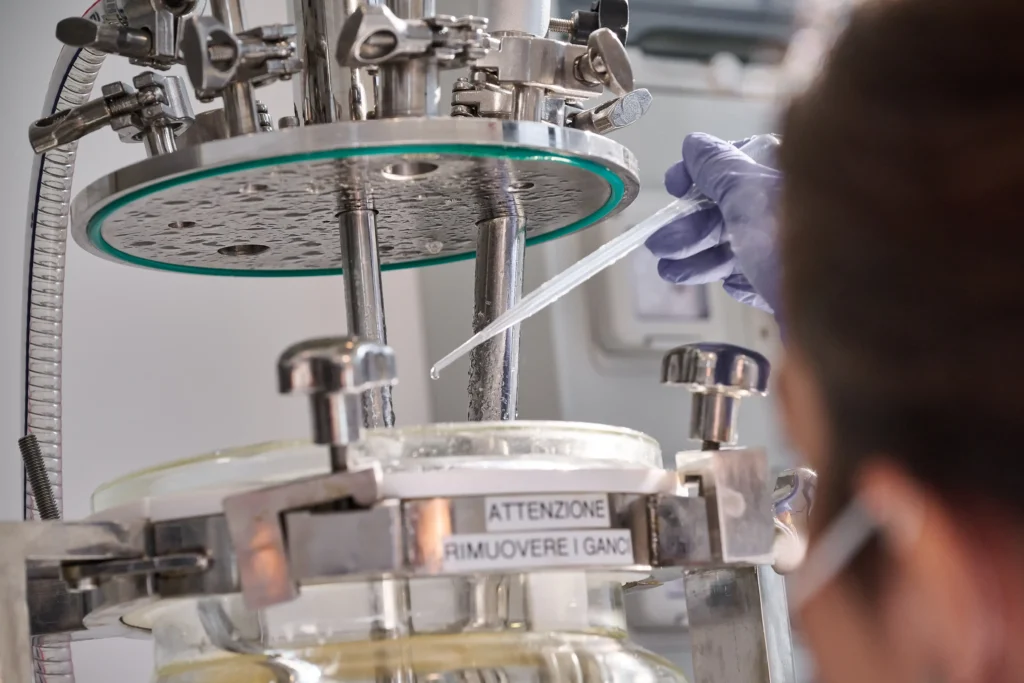
Dasais Cosmetic Hub develops customized, exclusive formulations for each client, supported by a proprietary AI platform with a database of over 36,000 ingredients. The technology supports the work of the technicians in research and formulation design.
Discover the Dasais research and development laboratory.
What are the differences between private label and a custom formula?
The main difference lies in the origin of the formulation: with catalog private label you start from an existing base; with custom development you work from a dedicated brief.
Criterion | Private label | Custom formula |
Starting point | Formulation already available | Brand-specific brief |
Development time | Generally shorter, if no changes are needed | Includes design, sampling and testing |
Initial investment | May be lower on the formulation development side | Includes dedicated development and the planned tests |
Customization | Depends on the options offered by the manufacturer | Broader, within the technical limits of the project |
Exclusivity | The formula may also be offered to other brands | Developed on a dedicated brief; exclusivity is to be agreed with the manufacturer. |
Suited to those who want to | Test the market quickly | Get a distinctive product and a recognizable brand |
Actual timelines and costs nevertheless depend on the project as a whole. Even a formula that is already available requires assessing packaging, quantities, documentation and production planning.
In both cases the product must comply with the same Regulation (EC) No 1223/2009.
When does private label make sense?
A catalog solution can be suitable when the brand finds a formulation that already matches what it wants to offer.
It can be an option to consider if:
- You want to test the marketbefore investing in dedicated formulation development.
- Your customization needs are limited and can be met by the available options.
- Your initial budget is limited, especially for research and development activities.
- You want to simplify the initial phaseby choosing a base that has already been developed.
Before proceeding, it is useful to ask which changes are possible, which tests are available and whether the formulation is also used for other clients.
A ready-made solution works when it genuinely fits the project: the choice should start from the product’s characteristics and consumers’ expectations.
When does it make sense to develop a custom formula?
Custom development is advisable when the characteristics of the formulation play a central role in the identity of the line.
It may be the most suitable path if:
- You want a specific texture.
- You want to select certain ingredients or meet precise formulation requirements.
- The product must meet the needs of a defined audience or market.
- You are looking for an exclusive formulation, developed solely for your brand.
- You want to build a recognizable line, with shared characteristics across the different products.
Can you start with private label and move to a custom formula?
It is a possible path, but it must be planned with the manufacturer.
A brand can start from an available formulation to gather market feedback and later develop a dedicated product. The switch does, however, require a new assessment: changing the formula can involve sampling, testing, documentation updates and packaging checks.
The continuity of the user experience should also be considered. If customers already know a certain texture or fragrance, a change may affect how the product is perceived.
For this reason it is useful to think about the evolution of the line from the start, deciding which characteristics to keep and which to develop.
How does Dasais work on custom formulations?
Dasais Cosmetic Hub guides brands through a process that integrates research, development and production. The formulation is designed around the client’s goals and verified during the subsequent development phases.
The process includes:
- Brief and project assessment: definition of the brand’s needs and the desired characteristics.
- Research and development: formula design and creation of samples.
- Testing and verification: assessment of stability and compatibility with the container.
- Packaging and filling: selection of solutions consistent with the formula, use and brand identity.
- Production: organization of batches according to the agreed requirements.
- Controls and traceability: process documentation and supply management.
Learn more about the Dasais partnership model.
Do you want to develop a cosmetic line that reflects your brand? Tell us about the product you have in mind, the characteristics you want and the project’s goals. Contact Dasais Cosmetic Hub to explore the path together.
Frequently asked questions
Is private label less professional than a custom formula?
No. Starting from a catalog formula does not determine the quality of the product. What matters is the formulation, the checks carried out, the production processes and how well it fits the brand’s needs.
Can I get an exclusive product with private label?
It depends on the offer and on the agreements with the manufacturer. A catalog formula can be offered to several brands. If exclusivity is a requirement of the project, it must be verified and agreed before proceeding.
Does Dasais develop custom cosmetic formulas?
Yes. Dasais develops customized, exclusive formulations for each client, integrating research and development, quality and production expertise.
How much does it cost to move from a catalog formula to a custom one?
The cost depends on the characteristics of the new product, the development activities, the tests and any changes to the packaging. A project assessment is needed to define investment and timelines.